Bank fees often arrive without an invoice, which makes them easy to code on autopilot.
On businesses we start to run, we see it regularly: bank charges sitting at No VAT month after month, not because anyone established there is no VAT, but because nobody stopped to check.
The question is not whether an invoice is attached. It is what the bank is charging you for.
Do Bank Charges Have VAT in South Africa?
Some do, and some don’t, and the line is not arbitrary.
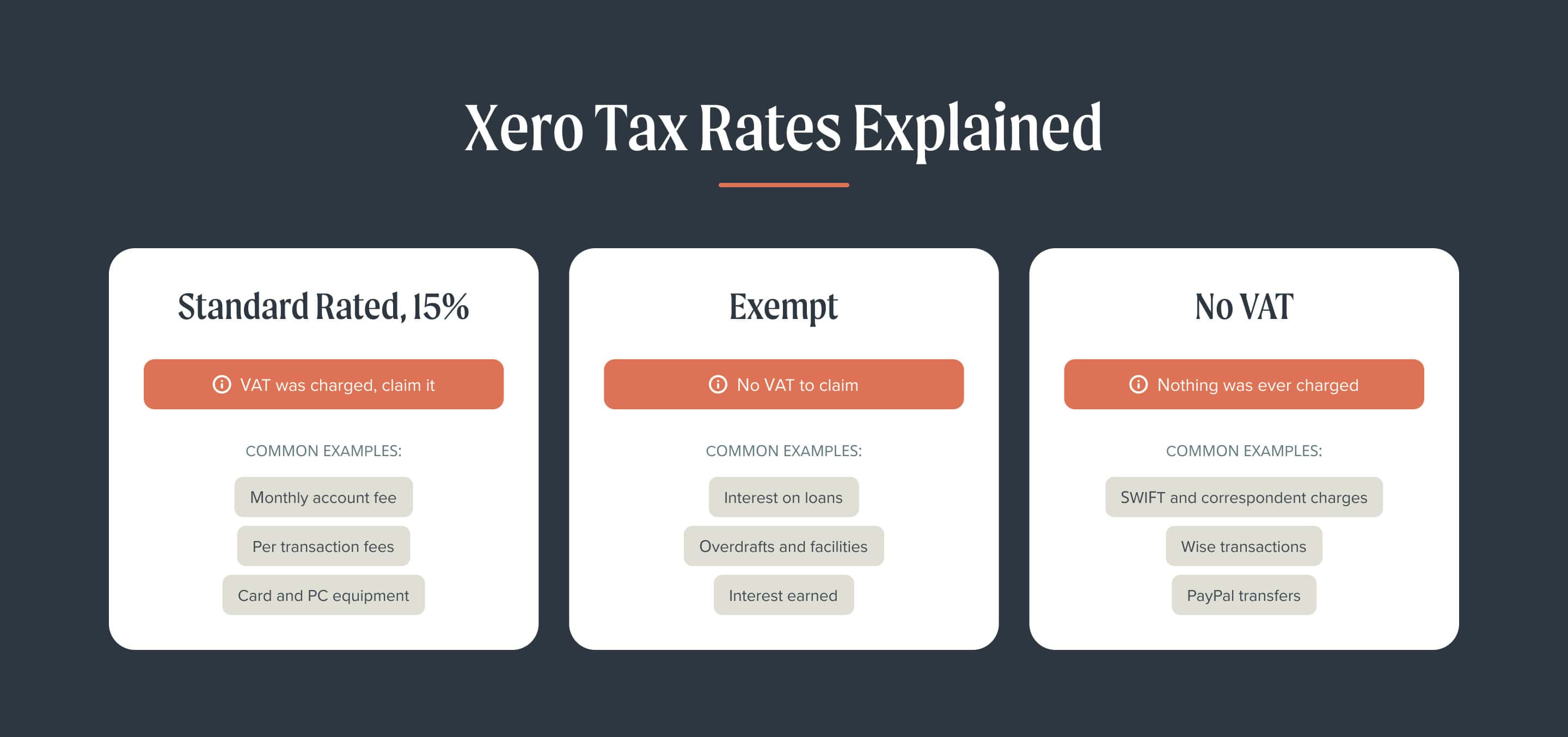
Fees are taxable. The monthly account fee, per-transaction charges, card fees, and cash handling are standard-rated at 15%, and the VAT is claimable if the account is used for business.
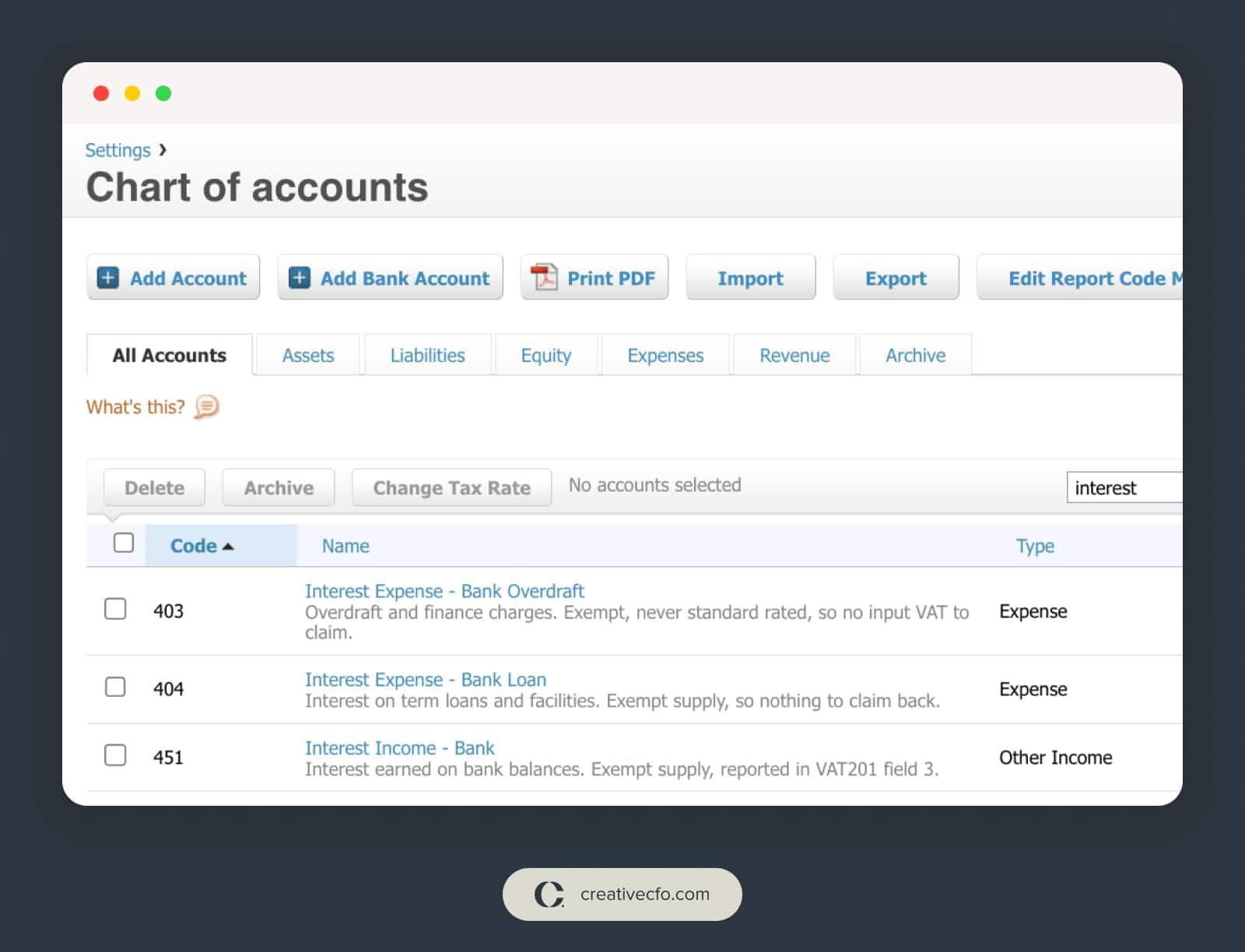
Interest is exempt. Interest on a loan, an overdraft or a facility carries no VAT, and neither does interest you earn. Exempt is not the same as No VAT, and in Xero it is not the same tax rate. Code interest as exempt so it stays out of your input tax.
The missing invoice is not the obstacle it appears to be. The bank’s documentation is the evidence, and on most South African statements, the VAT-bearing lines are flagged with an asterisk or a hash. Where a charge does not appear on the statement, the bank issues a separate tax invoice.
Why This Matters in Xero
The exception to our bill-behind-everything rule.
Our standing rule is that every profit-and-loss bank transaction is matched to a sales invoice or a bill. No cash coding because that skips the payables subledger, approval, and the audit trail.
The exceptions are the lines the bank itself generates, where no supplier invoice will ever exist:
- Bank fees, to the profit and loss as an expense through spend money.
- Interest expense on loans and facilities, the same way.
- Interest income on savings accounts, through receive money.
The statement is the source document. Everything else still comes from an invoice or a bill.
Split the Statement Before You Code It
The statement bundles things that need separating. A monthly account fee, per-transaction charges, card fees, cash deposit fees, a penalty for a failed debit order, and interest on the overdraft are not the same animal. Get interest into interest and fees into fees, because the two behave differently in the VAT and in any read of what the banking relationship actually costs.
Fee reversals are worth watching. A reversed charge coded as income rather than a credit against the expense makes the fee line look better than it is, and the input tax comes back out with it.
If you run entities in both South Africa and the UK, the same-looking line receives opposite treatments. UK bank charges for operating an account are exempt, so there is nothing to claim. South African fees are standard rated, so there is.

The Overseas Charge That Looks Like a Bank Fee and Isn’t
This one costs money in the other direction.
SWIFT and correspondent bank charges, and the fees you pay Wise, PayPal, Stripe or Revolut, are not supplied by a South African VAT vendor. No South African VAT was charged, so there is no input tax to claim, however much they resemble the bank fee two lines above. Code them at No VAT.
That matters more than a missed claim. Missing VAT on a domestic fee costs you the VAT. Claiming VAT that was never charged means SARS takes it back with interest and a penalty, and a fee account with a blanket standard rate is exactly the pattern a verification looks for.
Don’t Let the Bank Feed Make the Accounting Decision
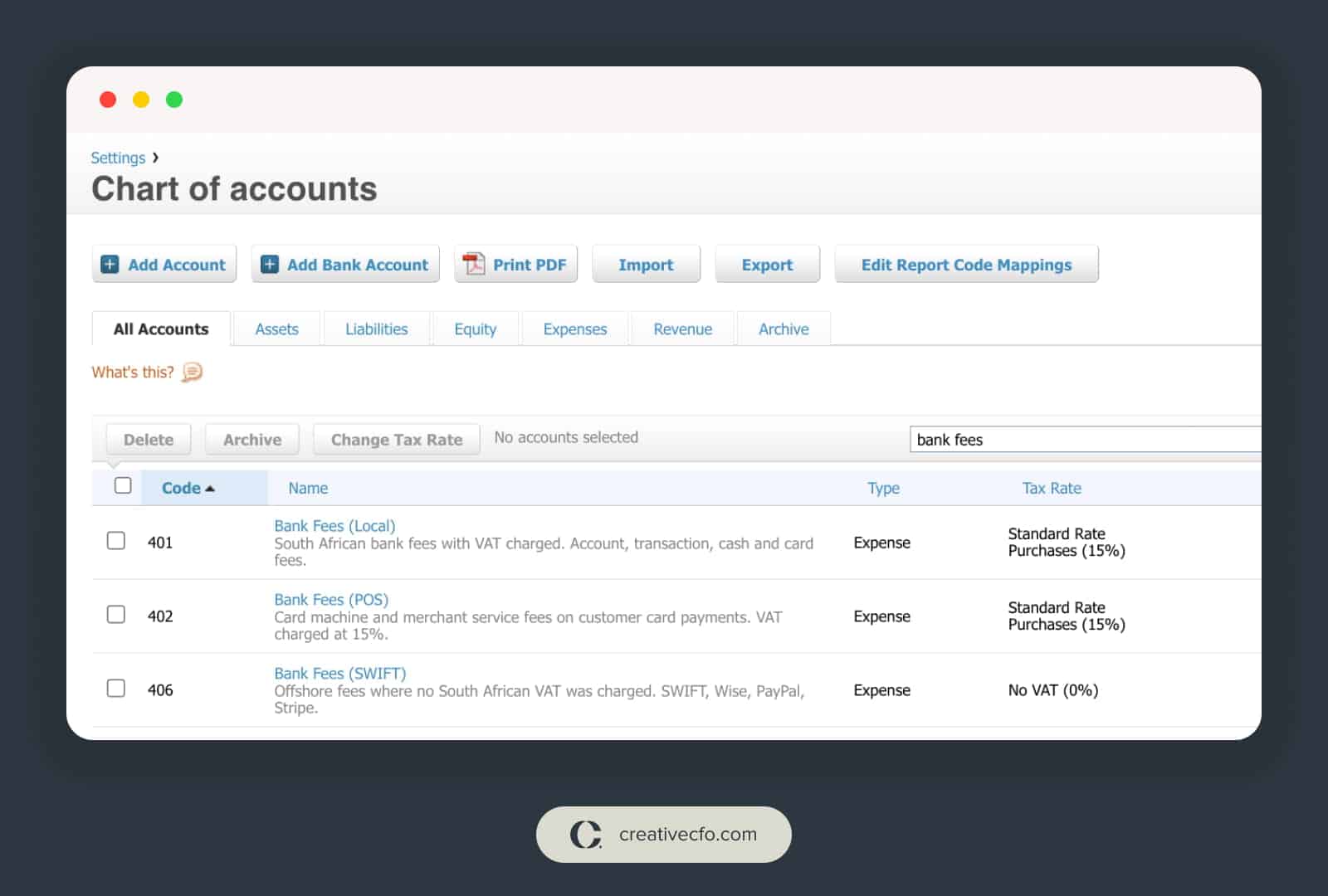
The durable fix is in the chart of accounts and requires two accounts. Domestic bank charges are defaulted to standard-rated. Offshore and processor fees are set to No VAT by default.
Then let bank rules do the coding. Write them against the description the bank actually uses, not a loose match on the word “fee”, or the rule will scoop up your interest lines with the fees. The treatment is then right by construction, rather than right when someone remembers.
The same principle applies across your financial processes. Automation works best when the rules and systems behind it are set up properly from the start, whether you’re automating bank transactions or moving from manual to automated invoicing.
The Question to Ask
Ask your finance team what the business paid in bank charges last year, and whether the VAT on it was claimed. Most owners have never seen that number.
If it wasn’t claimed, it is usually not lost. The VAT Act allows the deduction in a later period, within five years of the period it first became claimable.
If you’re unsure and don’t know where to start or have any questions about your Xero setup, get in touch with us and we can help you get things set up correctly.