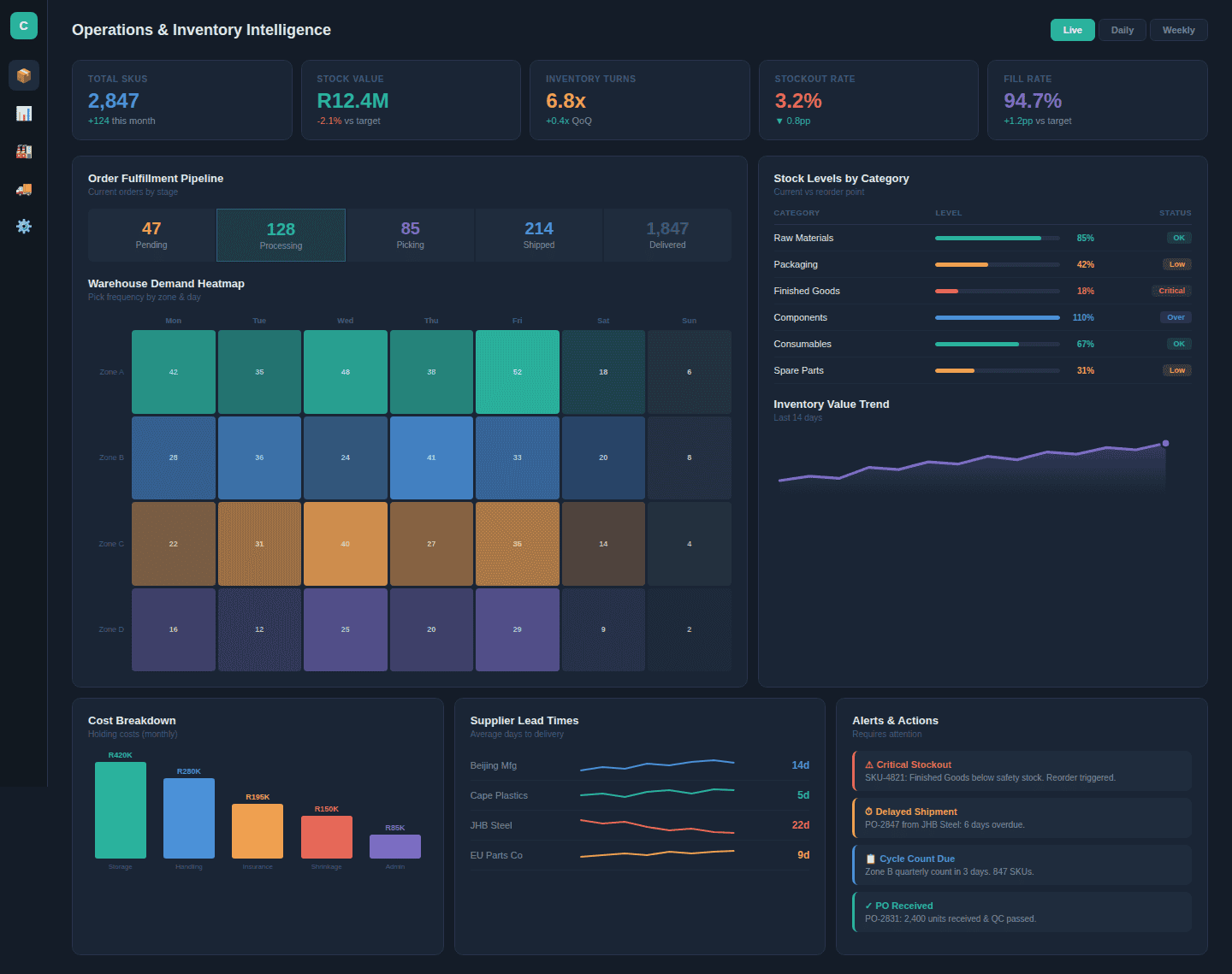
Why most businesses get their data strategy backwards. And what a real data partnership actually looks like.
The Story We Hear Every Time
Every business that comes to us about data has the same story. The reports take too long. The numbers don’t tie up. Someone on the leadership team is making decisions from a spreadsheet that nobody trusts but everyone uses anyway. And they’ve finally hit the point where they’re done with it.
That instinct is right. The problem is real.
But somewhere between “we need better data” and “can you just automate our reports,” something goes sideways. The gap between what businesses imagine and what’s actually required is where most data initiatives quietly die.
What we find ourselves saying more than anything else: the report isn’t the work.
Why This Framing Matters
It comes down to how most business intelligence solutions are marketed. Click, buy, plug in clarity. The promise is software-like. The reality is an engineering project.
Data isn’t software. Software is a solved problem someone else packaged for you. The logic is baked in. HubSpot manages your pipeline. Xero runs your books. You buy it, configure it, go.
People carry that same mental model into data. Buy the tool, connect the systems, get the dashboard. But data doesn’t work like that. Data is alive. It reflects every messy, inconsistent, human decision your business has ever made. Every manual override in your ERP, every spreadsheet workaround, every field someone left blank because they didn’t think it mattered. No tool fixes that on arrival.
Here’s how we think about it:
- Data engineering is more engineering than it is data. You’re building infrastructure, pipelines, transformations, validation layers, monitoring. It’s plumbing. Design it badly and everything downstream suffers.
- Data science, on the other hand, is more data than it is science. The fancy models everyone wants are only as good as what flows into them. Getting data clean, complete, connected, and contextualised is the actual job. The science part is comparatively straightforward.
This matters because it sets expectations. If you think you’re buying software, you expect a delivery date and a finished product. If you understand you’re commissioning engineering, you expect a process, and you plan accordingly.
Two Kinds of Unready
The businesses that struggle most with data tend to fall into one of two camps. Neither is wrong. Both are responding to real pressures. But both show up with assumptions that make the work harder than it needs to be.
The first is the large, established organisation. Risk-averse, governance-heavy, process-rich. They’ll give you time but not autonomy. Every decision routes through three layers of sign-off. They understand cost control and compliance intuitively, which is genuinely valuable. But that same instinct turns a six-month project into eighteen months because the steering committee meets quarterly and every change needs a new approval cycle. The data team says no. The executives want their reports. You’re stuck in the middle.
The second is the high-growth business scaling fast. Running on a handful of SaaS tools stitched together with integrations that mostly work. They want output yesterday. Skip discovery. Skip strategy. Just build it. Two months later there’s a compute bill nobody budgeted for, reports that don’t reconcile to source systems, and a growing suspicion the whole thing was oversold. It wasn’t. They built the roof before they poured the foundation.
One gives you patience but takes away control. The other gives you control but has zero patience. Neither is set up for what a data project actually requires: a partnership with enough trust, time, and room to do the work properly.
What You’re Actually Signing Up For

The Report Is The Last Mile
When a business says they need better reporting, what they mean is: give us a dashboard with the numbers we care about, updated automatically, so people stop showing up to meetings with different figures.
That’s fair. That’s a completely reasonable thing to want.
But the report is the last mile. It’s the visible tip of a much bigger system that nobody sees. Before that report can be trusted, someone has had to
- Sort out the data quality in your source systems
- Set the consistency of how things are classified across tools
- Map out the logic of how different systems talk to each other
- Set up the validation that what comes out matches what went in
- Implement the ongoing monitoring so it stays that way next week, next quarter.
We come from financial management, so here’s how we explain it. A set of management accounts is not the work. The work is what’s underneath. The reconciliations, the controls, the information flows that make those numbers mean something. Hand someone a beautiful set of accounts built on top of unreconciled books and you haven’t given them insight. You’ve given them a liability.
Data is exactly the same. Garbage in, garbage out. No amount of front-end polish changes what’s actually flowing through the pipes.
Automation Is Not A Destination
With AI and automation tools everywhere right now, there’s a growing belief that once something is automated, you’re done. Set it up, walk away, never think about it again.
It doesn’t work like that.
Automation hasn’t taken effort from 100 to zero. It’s taken it from 100 to maybe 10. And that remaining 10 is the stuff that actually matters. Testing, monitoring, scenario planning, watching compute costs, clearing disk storage, validating edge cases, updating pipelines when your source systems inevitably change.
The businesses that get this right treat automation as an ongoing capability, not a once-off event. They budget for maintenance. They expect iteration. They understand that the person who built the pipeline still needs to be watching it. Because the day you stop watching is the day the numbers quietly drift and nobody notices until someone’s in a boardroom asking hard questions.
What Readiness Actually Looks Like in 2026
The tools are fundamentally different now. Cloud platforms, open-source frameworks, and modern orchestration have brought enterprise-grade infrastructure within reach of any growing business. Lower barriers, though, don’t mean no barriers.
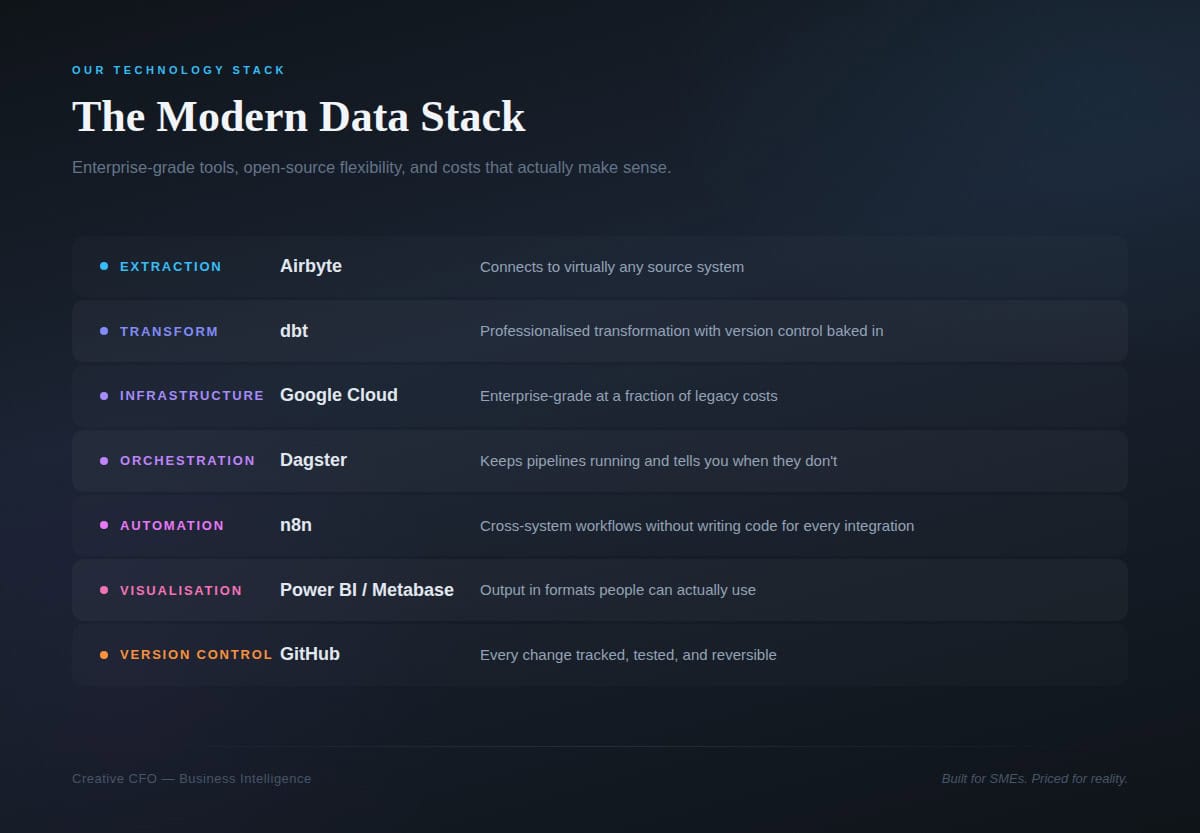
Being data-ready means being honest about where your business actually is, not where you wish it was. It means admitting that your source data might be a mess before asking someone to build a dashboard on top of it. It means giving your data team space to discover before they deliver.
Most importantly, it means thinking about data as a partnership, not a purchase. Not a product you install, but an ongoing relationship with someone who understands the full lifecycle. From extraction through to insight, and everything that has to go right in between.
The Businesses That Will Thrive
Knowledge is cheap now. That’s not a prediction, it’s already happened. AI has commoditised information at a speed nobody saw coming. You can generate a report template in seconds. You can ask a model to write your SQL. You can spin up a dashboard with a prompt.
Knowing how to build a report is no longer the differentiator.
What is: the ability to synthesise data into better decisions. To look at the same information everyone else has and actually see what matters, what to build, what to ignore, what to do next.
Intelligence was never about knowing things. It’s about knowing what to ask.
The businesses that thrive with data won’t be the ones that had the most of it. They’ll be the ones that knew what to want from it.
The report was never the work. The thinking behind it always was.
A Few Honest Caveats
- Every data environment is different. Timelines, costs, and complexity vary based on your source systems, team capacity, and goals. What takes three months for one business might take six for another, and that’s not a failure of process. It’s just reality.
- Not every business needs enterprise-grade infrastructure. The right solution matches where you’re actually going, not where you might go one day. Over-engineering early is its own kind of problem.
- And better data doesn’t automatically mean better decisions. The infrastructure is the foundation. The thinking that happens on top of it is still on you. Though a good team can help with that too.
Mark Troy is a Business Intelligence Manager and Team Leader at Creative CFO. We build and run fractional finance and business intelligence teams for high-growth businesses across South Africa, the UK, the Netherlands, and Dubai. If you’re recognising your business in this piece, that’s not a problem. That’s a starting point.